
How Much Does It Cost to Start a Business in Virginia?
How Much Does It Cost to Start a Business in Virginia?
Starting a business in Virginia does not have to mean spending thousands of dollars before you make your first sale. But it does mean knowing which expenses are required, which help you attract customers, and which can wait.
If you are researching Virginia LLC costs, the state filing fee to form a Virginia limited liability company is
$100. Virginia also charges a $50 annual LLC registration fee, beginning the year after formation. Those fees establish and maintain your LLC with the state; they do not cover everything needed to open and operate your business. Virginia Limited Liability Companies
Your actual startup budget depends on what you sell, where you operate, what equipment you already own, and how quickly customers will pay you.
How Much Does a Virginia LLC Cost?
Here are the main government fees to understand:
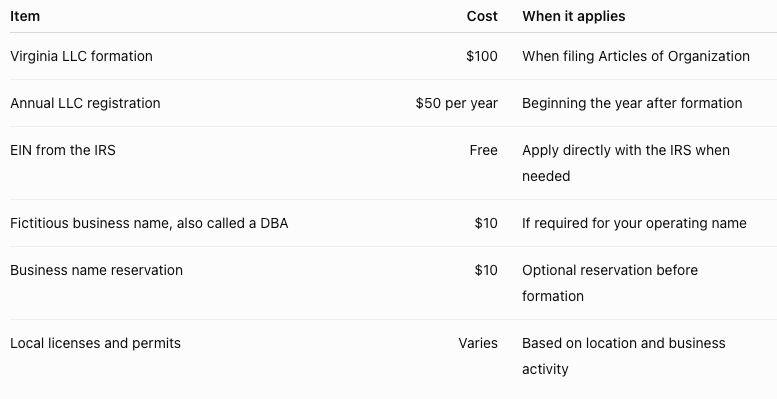
These fees come from the Virginia State Corporation Commission and IRS. Local licensing expenses are separate. Virginia Limited Liability Companies
A formation company, attorney, or accountant may charge separately for helping establish your business. Those service charges are additional to the state filing fee. Compare what is included before purchasing a package.
Forming an LLC Is Only Part of Your Startup Budget
A $100 filing fee can make starting a business sound inexpensive—and the paperwork can be. Opening a storefront, purchasing equipment, buying inventory, and covering expenses while finding customers are separate financial commitments.
A consultant working from home with an existing laptop has a different budget from a restaurant owner signing a lease and installing a commercial kitchen.
Before deciding how much money you need, list what your business requires to operate, deliver its product or service, and get paid.
Check Local Business Licenses and Permits
Registering your LLC does not replace local licensing, zoning approval, or professional licensing requirements. Virginia’s startup guidance directs owners to check for requirements at the local level. sbsd.virginia.gov
For example, Henrico County requires businesses to apply for a business license before operating. Its guidance says businesses with gross receipts below $1 million normally owe no business license tax, but they must still apply. Other localities have different rules and thresholds. henrico.gov
Check requirements before signing a lease, purchasing specialized equipment, or promising an opening date.
Other Startup Expenses to Plan For
Insurance: Get coverage quotes based on your actual work, property, vehicles, employees, and customer contracts. Include the initial payment and ongoing premiums in your budget.
Banking and bookkeeping: Compare account fees, minimum balances, transaction limits, and payment processing charges. Establish a manageable way to track income, expenses, receipts, and tax obligations.
Your domain, logo, and website: Customers need to understand what you offer and how to contact you. Budget for a clear identity and a website that explains your services and makes the next step easy. Compare initial pricing with ongoing hosting, management, email, and renewal costs.
Equipment and inventory: Separate essential purchases from upgrades. What must you own to complete your first paid job? What could you rent, buy used, or purchase after demand grows?
Marketing: Decide how your first customers will find you. Referrals, networking, outreach, search, advertising, and local partnerships all require some combination of time and money.
What Could a Small Startup Budget Look Like?
Here is an illustrative budget for a solo service business operating from home with an existing computer. These are planning allowances, not vendor quotes or statewide averages.
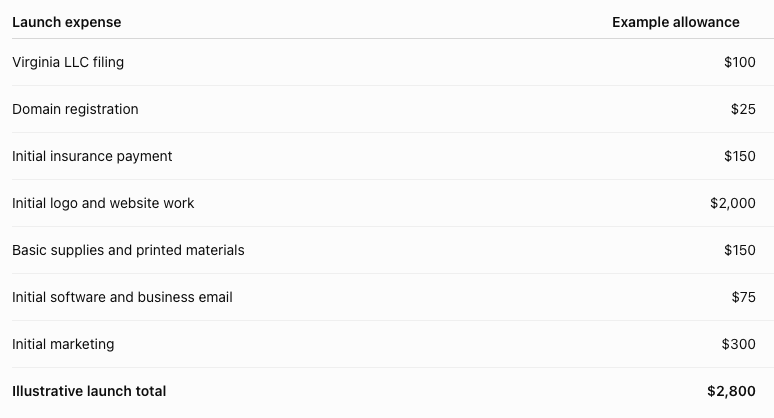
This example excludes applicable local or professional licensing fees, paid registered agent services, legal or accounting assistance, specialized equipment, taxes, owner living expenses, and operating reserves. Add those based on your situation.
Your total could be lower if you already have the essentials or higher if you need inventory, employees, professional support, or commercial space.
Save Money by Buying What You Need at the Right Time
New business owners receive plenty of recommendations. Some are useful immediately. Others make more sense later.
Before adding a subscription or service, ask:
- Is this required for my business now?
- Does it help me serve customers, collect payment, or manage a real risk?
- What does it cost after the introductory offer ends?
- Can a simpler process meet my needs while demand grows?
For example, a solo owner should understand their business structure and compensation requirements before purchasing payroll services. Trademark advice may be valuable early when a name is central to the business or expansion plans.
The right spending order depends on your business. Do not postpone required licenses, appropriate insurance, or necessary professional advice simply to make the launch total look smaller.
One easy expense to avoid: paying for an EIN application when you can obtain it directly from the IRS for free. Internal Revenue Service
Budget for the Months After You Open
Opening costs are only part of the picture. You may purchase supplies today, complete a project next week, and receive payment weeks later.
Build a cash forecast that includes recurring bills, payment timing, inventory replenishment, tax reserves, and your own income needs. Test what happens if sales arrive later than expected.
For example, if business overhead is $600 a month, three months of overhead is $1,800. That reserve would be separate from the $2,800 example launch budget—and would not cover household expenses, taxes, or additional job costs.
Having enough money to open is helpful. Having enough money to keep delivering while you build a customer base is essential.
Start With a Plan You Can Afford
The answer to “How much does it cost to start a business in Virginia?” begins with your business model.
Your budget should account for formation, operating requirements, essential tools, marketing, and cash to carry you through the early months.
Spend intentionally. Establish the essentials, make it easy for customers to understand and buy what you offer, and add expenses when they support a clear need.
Ready to turn your idea into a business? Explore Bossorama’s step-by-step Virginia business startup guide to plan your next move—from choosing a name and registering your business to building your brand and finding your first customers.